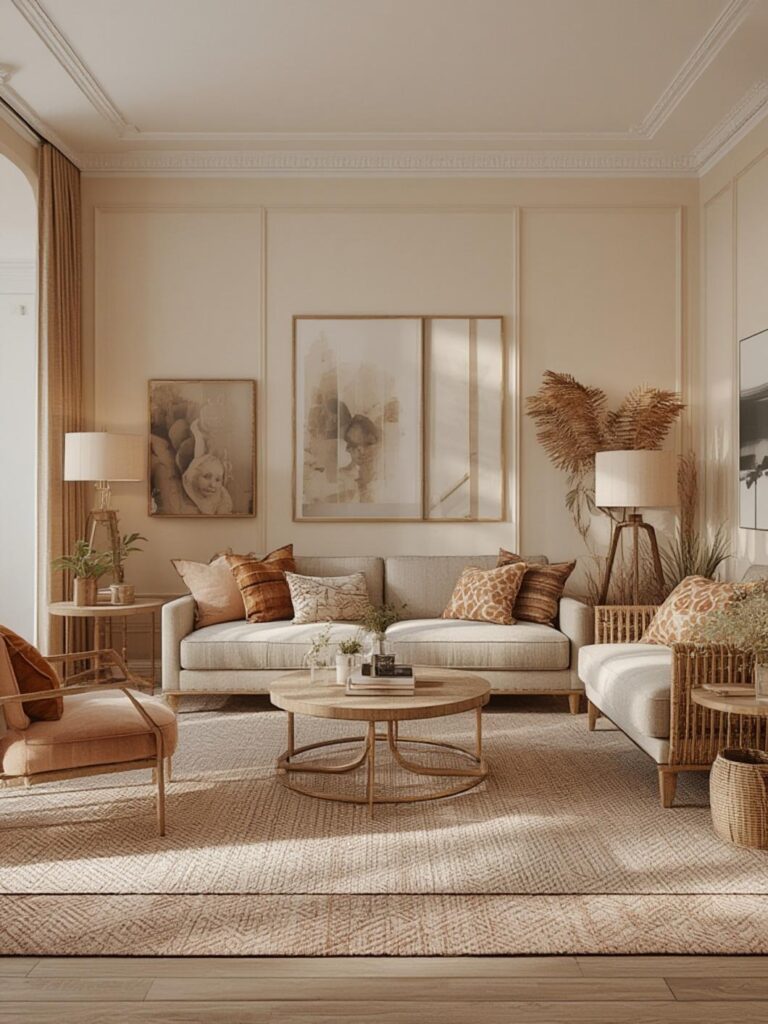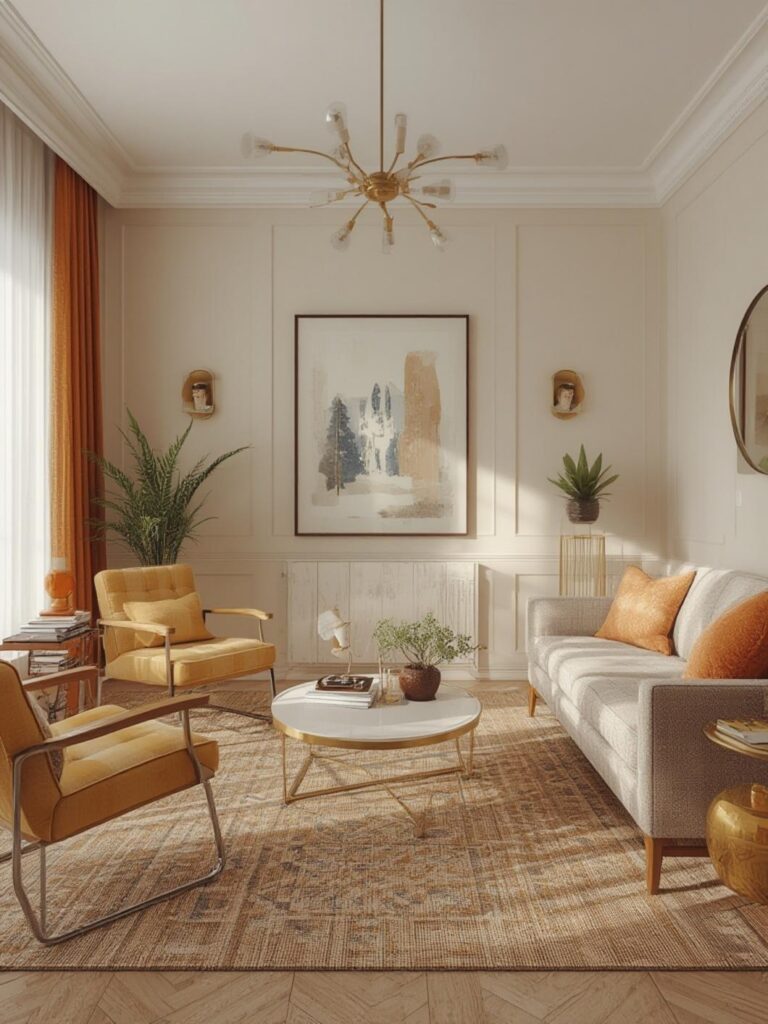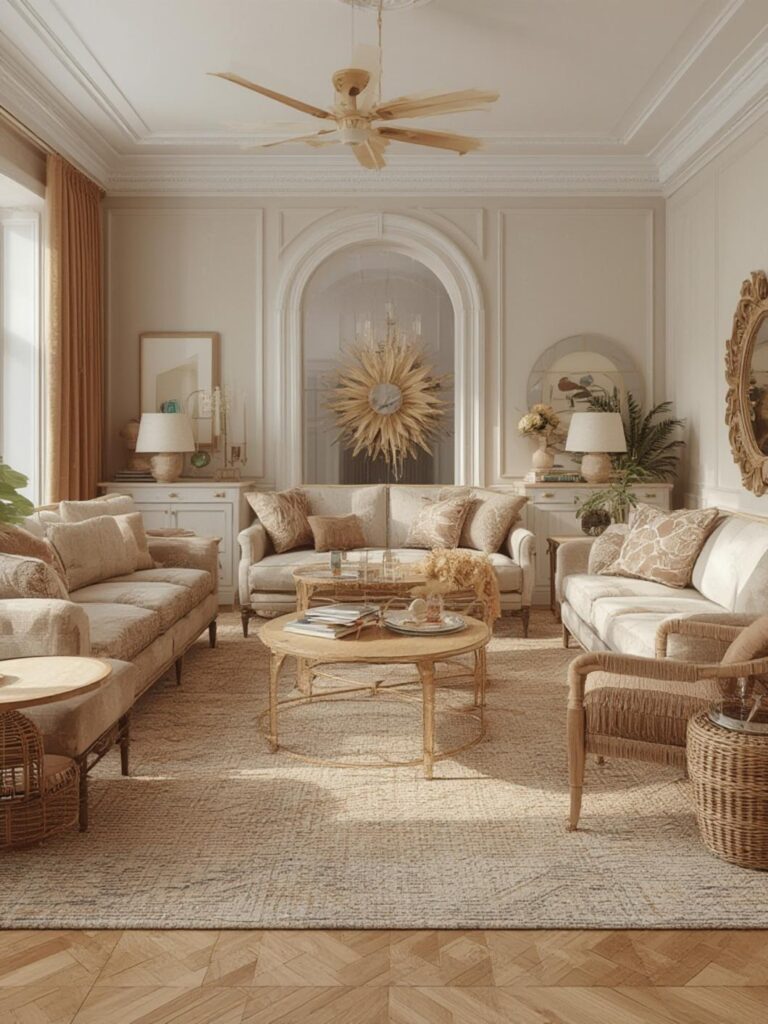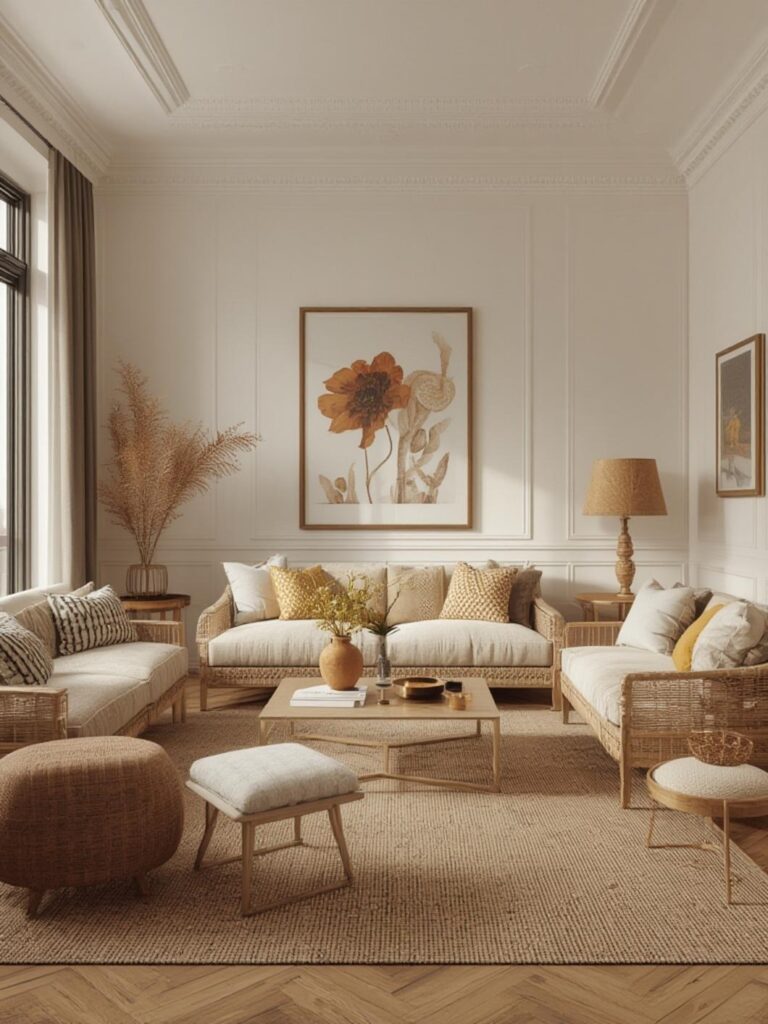

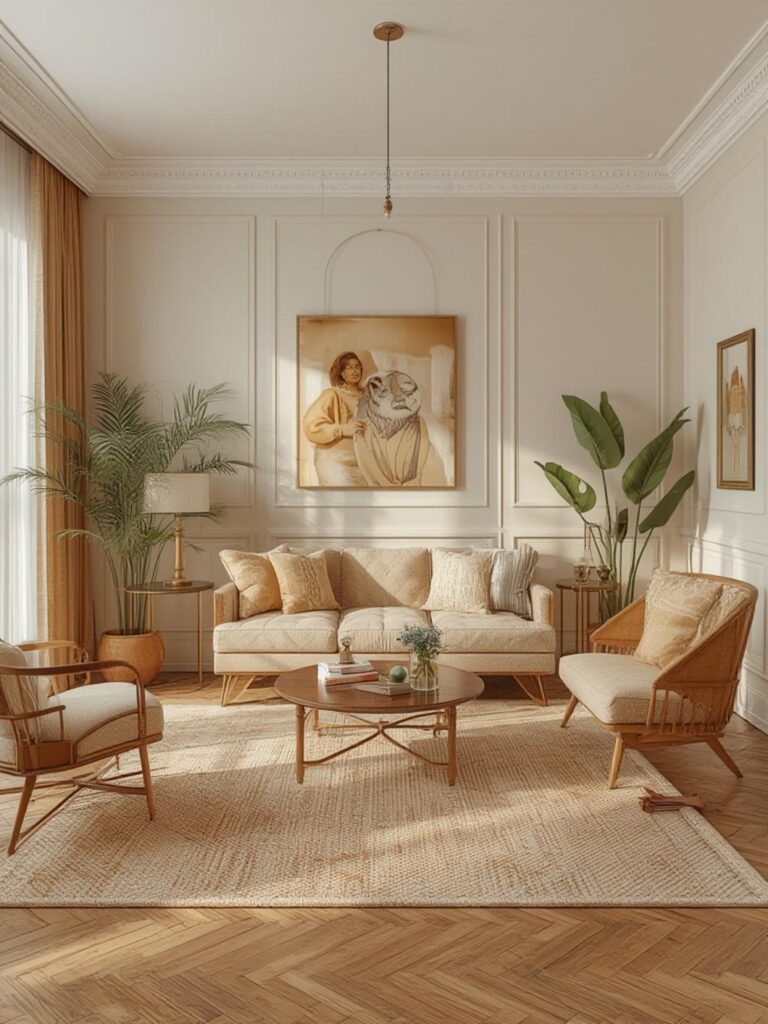
Have you ever walked into your living room and felt like something was missing, but you couldn’t quite put your finger on it? You crave a space that feels curated yet effortless, stylish yet cozy enough for a Sunday afternoon nap. The secret often lies not in adding more clutter, but in mastering the art of interior styling through a balanced blend of texture and tone.
Creating a sanctuary that reflects your personality while remaining timeless is a game-changer for your home environment. In this guide, we are diving deep into creating the perfect Neutral boho living room, a design choice that brings serenity and warmth into your daily life.
Materials & Decor Items
To achieve this organic, lived-in look, you don’t need a massive budget, just a keen eye for texture. Here is your shopping list for mastering that coveted earthy color palette.
- Furniture:
* Sofa: A low-profile, deep-seated sofa in cream, beige, or oatmeal linen.
* Coffee Table: Rattan, cane, or light oak wood. Look for rounded edges or circular shapes to soften the room.
* Accent Chairs: Woven papasan chairs or bouclé armchairs.
- Textiles & Rugs:
* Area Rug: A jute or sisal rug layered with a smaller vintage-style wool rug for softness.
* Curtains: Sheer white linen curtains to maximize natural light.
* Throws & Pillows: A mix of chunky knit blankets, macramé cushion covers, and velvet pillows in muted terracotta or sage.
- Lighting:
* Overhead: A large woven pendant light or a beaded chandelier.
* Ambient: A rattan floor lamp and several beeswax or soy pillar candles.
- Wall Decor & Accessories:
* Art: Abstract line art in black frames or vintage landscape prints.
* Plants: A mix of large floor plants (Monstera or Fiddle Leaf Fig) and hanging Pothos.
* Accessories: Ceramic vases, woven baskets (for storage), and driftwood accents.
- Optional/Affordable Alternatives:
* Thrifted wicker baskets instead of new ones.
* DIY macramé plant hangers.
* Peel-and-stick wallpaper with a subtle botanical print for an accent wall.
Planning & Styling Timeline

Preparation & Planning (1–2 Weeks):
This is the most crucial phase. You need to measure your space, create a mood board (Pinterest is great for this), and decide on your exact color variations. You don’t want your “beige” to clash with your “greige.”
Shopping (1 Weekend to 2 Weeks):
Sourcing the right furniture layout takes time. If you are buying online, account for shipping delays. If you are thrifting, dedicate a weekend to hunting for unique pieces.
Styling Duration (4–8 Hours):
- Quick Refresh (4 Hours): Swapping pillows, rearranging existing furniture, adding new plants, and decluttering.
- Full Makeover (8+ Hours): Painting walls, assembling new furniture, hanging wall art, and deep cleaning.
Step-by-Step Instructions
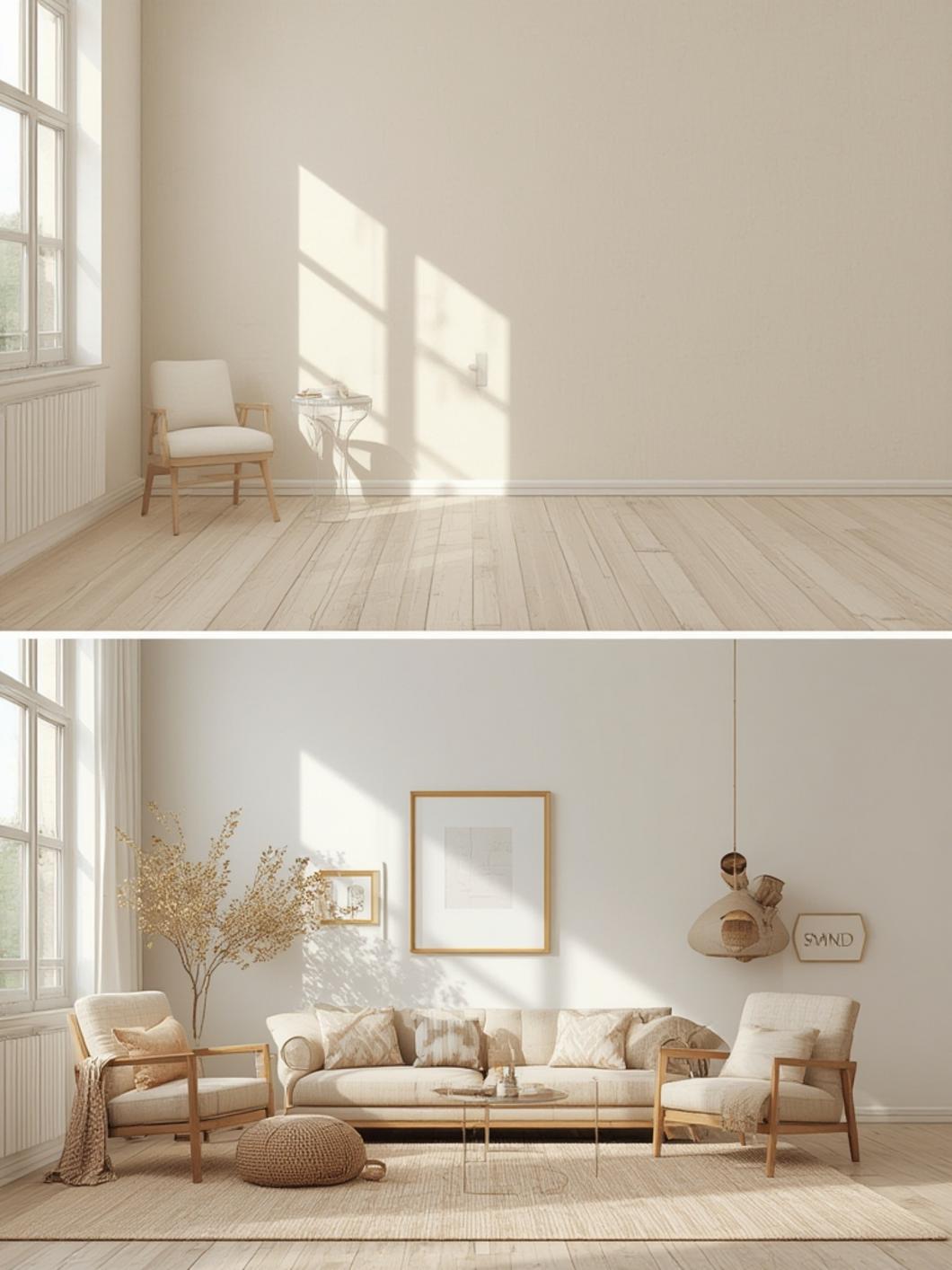
1. Start with a Blank Canvas: Clear the room as much as possible. Paint walls a warm white or a very light greige. This sets the stage for your Neutral boho living room to shine without visual competition.
2. Lay the Foundation (The Rug): Place your largest rug first. It should be big enough that at least the front legs of your sofa and chairs sit on it. This anchors the space.
3. Define the Furniture Layout: Float your sofa away from the walls if space allows. Create a conversational grouping. The goal is to create a “hug” with your furniture facing each other to encourage connection.
4. Establish the Color Base: Here is where you implement your earthy color palette. Layer your neutrals. Use cream walls, a jute rug, and a beige sofa. Avoid flat, sterile whites; aim for warm undertones.
5. Layer Textures: This is the “Boho” secret sauce. Throw a chunky knit blanket over the sofa arm. Add velvet and linen pillows. Mix a rattan tray on the coffee table with a ceramic bowl. Texture creates depth in neutral spaces.
6. Install Lighting: Avoid harsh overhead lighting. Use your woven pendant for style, but rely on floor lamps and warm-toned bulbs (2700K) for the evening.
7. Add Life and Wall Decor: Hang your plants near windows. Place art in clusters (gallery wall style) rather than scattering single pieces. This makes the room feel collected, not decorated.
8. Final Declutter: Remove anything that doesn’t serve the vibe. If it’s too shiny, plastic, or brightly colored, hide it in a woven basket.
Benefits & Advantages
- Mood Enhancement: Neutral tones are psychologically calming. Reducing visual noise lowers cortisol levels.
- Longevity: Unlike trendy bright colors, this aesthetic doesn’t go out of style. You can swap out accessories without replacing major furniture.
- Space Optimization: A cohesive color palettes strategy makes small rooms feel larger because the eye doesn’t stop at visual breaks.
- Versatility: This look pairs beautifully with other design elements, making it easy to update your lighting or accessories seasonally.
Tips, Alternative Styles, or Styling Advice
If you want to tweak this look, try these variations:
- Scandi-Boho: Lean into blonde woods and white-on-white. Keep lines very clean and minimize clutter.
- Maximalist Boho: Add more plants, mix patterns (like stripes with florals), and use deeper earth tones like rust and deep olive.
- Rental Friendly: Use command strips for gallery walls. Focus heavily on furniture coverings (slipcovers) and floor lamps (avoid hardwiring).
- Small Spaces: Use mirrored surfaces (like a round mirror) to bounce light. Use nesting tables instead of one large coffee table.
Common Decorating Mistakes to Avoid
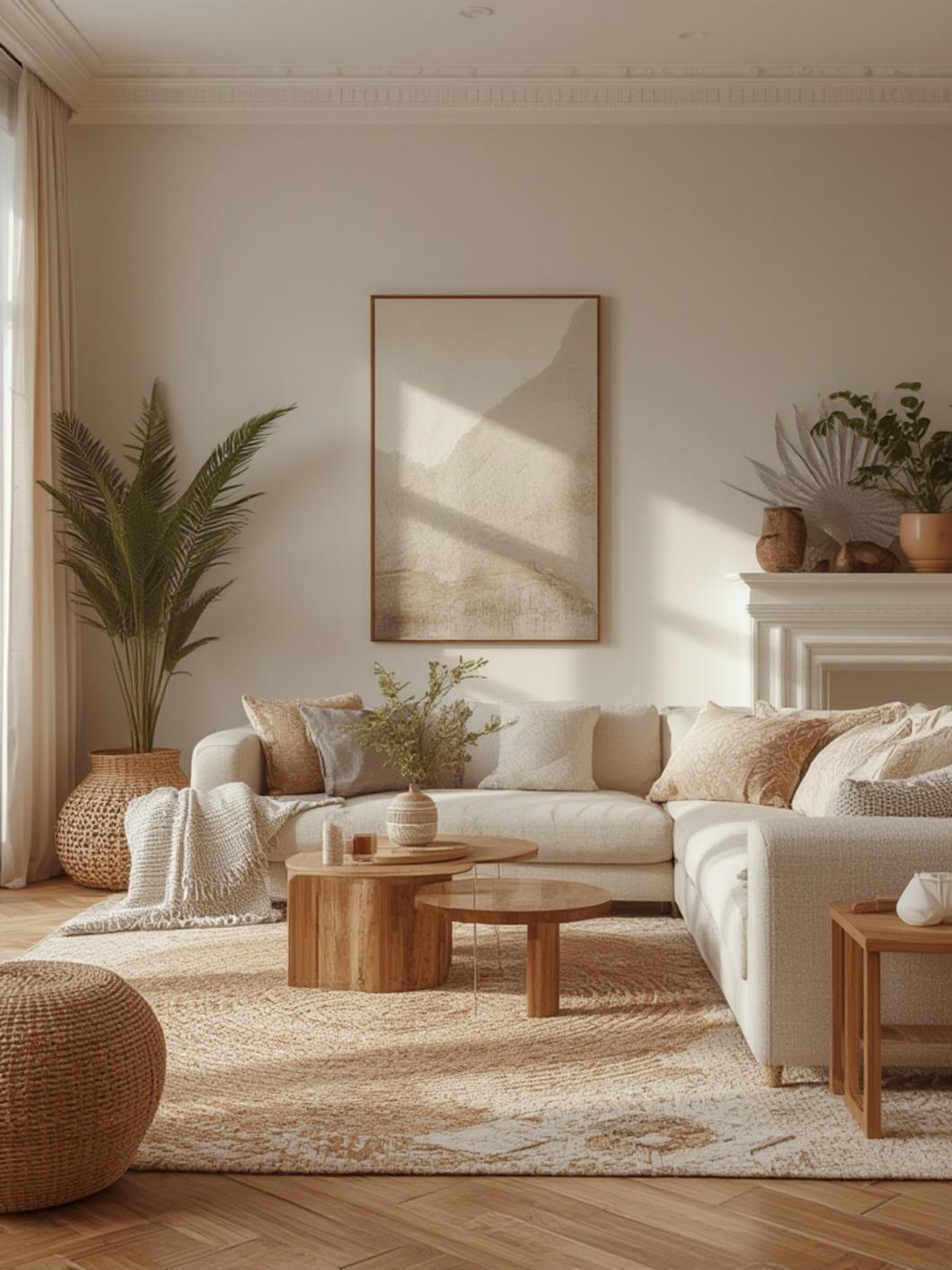
1. Too Much White: A sterile white room feels clinical, not cozy. You must introduce wood, woven items, and warm tones.
2. Ignoring Scale: A tiny coffee table in a large living room looks lost. Conversely, a massive sectional overwhelms a small apartment. Measure twice!
3. Matching Everything: Boho is about collected, not catalog. Don’t buy a matching living room set. Mix a modern sofa with a vintage chair.
4. Forgetting Layers: A room with just a sofa and a rug feels empty. You need at least three layers of texture (e.g., rug, throw, pillows).
Maintenance & Upkeep Tips
- Fabric Care: Use a steam cleaner on your linen sofa once a season to keep it crisp. Spot clean rugs immediately with a vinegar/water solution.
- Dusting: Textured items (macramé, woven lights) are dust magnets. Use a microfiber cloth or a vacuum brush attachment weekly.
- Rearranging: Every 6 months, swap the placement of your accent chairs or rotate your rug. This gives the room a “new” feel without spending money.
- Plant Care: Dust plant leaves regularly to help them breathe and absorb sunlight.
Conclusion
Designing a Neutral boho living room is more than just an aesthetic project; it’s about creating a peaceful retreat that supports your well-being. By focusing on an earthy color palette and thoughtful textural layers, you can transform a standard room into a soulful sanctuary.
Start with small changes todaynperhaps just a new plant or a woven throw and build your way up to the room of your dreams. We’d love to see your progress! Share your room makeover photos with us or check out our other guides on lighting and wall decor for more inspiration.
FAQs
1. Can I achieve this look on a tight budget?
Absolutely. This style relies heavily on thrifted finds, DIY projects, and natural elements. Focus on affordable textiles (Amazon or IKEA) and hunt for second-hand wicker furniture.
2. My room gets very little natural light. Can I still do this?
Yes. Focus on lighter walls (white/off-white) and use “artificial natural light” (3000K-4000K bulbs). Mirrors and glass decor will help reflect what light you have.
3. How do I keep a neutral room from looking boring?
Texture is the answer. If you stick to one color family (like beige), ensure you have rough (jute), smooth (ceramic), soft (velvet), and hard (wood) surfaces mixed together.
4. What is the main difference between Boho and Minimalist?
Minimalism focuses on “less is more” and negative space. Boho focuses on “more is more” but through layers and texture, not necessarily clutter. It’s a lived-in, maximalist approach to neutrals.
5. Are plants essential for this style?
While not strictly essential, plants are the easiest way to bring life and an organic feel to a neutral room. If you have a black thumb, high-quality faux plants are a great alternative.